
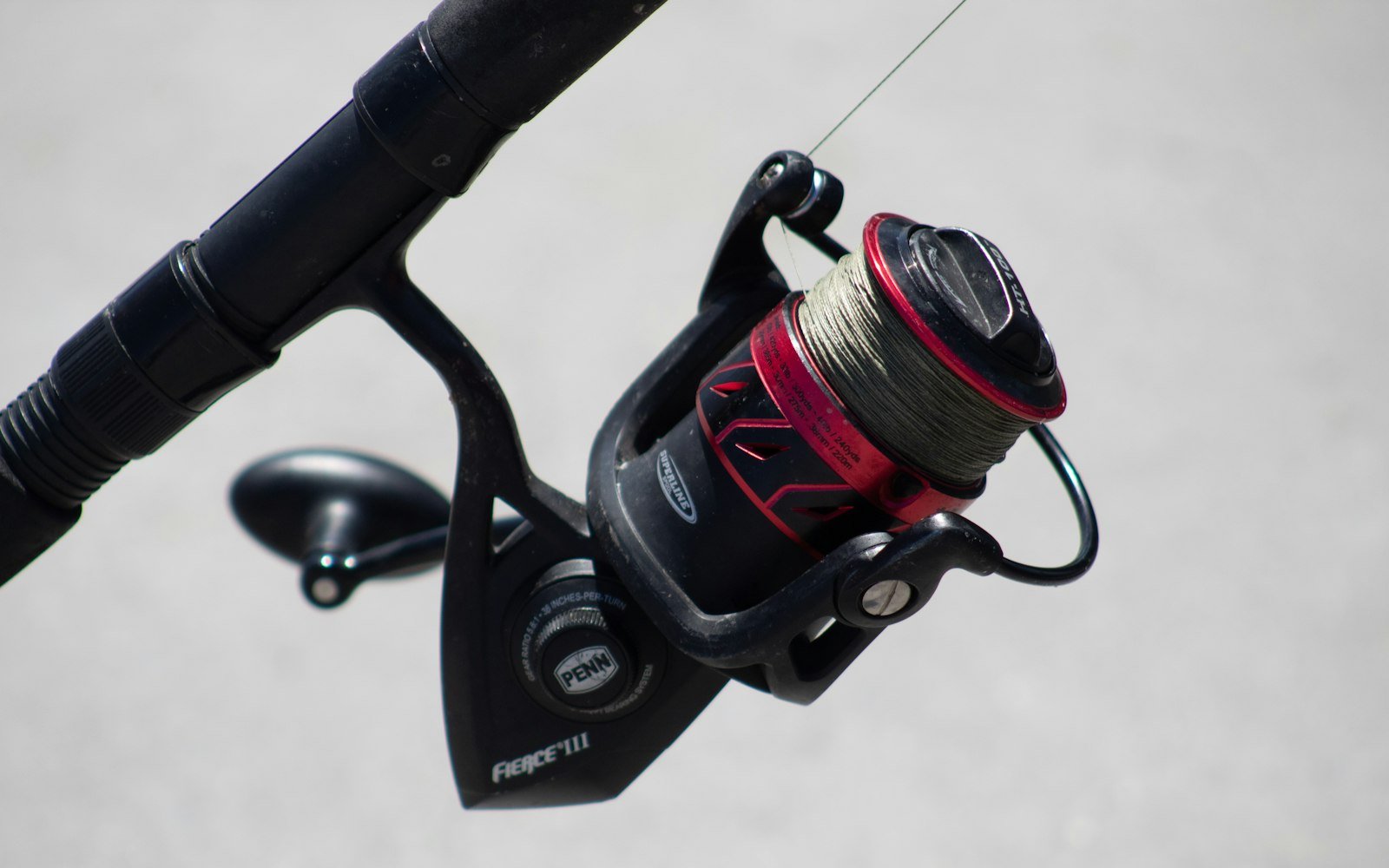
Your line is the only thing connecting you to the fish, yet it is often the last item anglers think about. The three main types — monofilament, fluorocarbon and braid — behave very differently. Matching the line to the way you fish will help you get more bites and land more of them.
Monofilament: forgiving and affordable
- Stretches under load, which acts like a shock absorber on hard hook sets and with treble-hook lures.
- Floats, making it a natural choice for topwater baits.
- Easy to cast and to tie good knots with, ideal for beginners.
- Downsides: more stretch means less sensitivity, and it breaks down faster with sunlight, so replace it more often.
Fluorocarbon: low visibility and abrasion resistance
- Its light refraction is close to that of water, so it is very hard for fish to see — great in clear water.
- Sinks, which helps crankbaits run deeper and keeps finesse rigs in contact with the bottom.
- Excellent abrasion resistance around rocks, docks and wood.
- Downsides: stiffer and springier, so manage line twist and moisten knots before tightening.
Braid: maximum strength and sensitivity
- Almost no stretch, so you feel every tap and get powerful hook sets at long distance.
- Very thin for its strength: 30 lb braid is roughly the diameter of 8 lb mono.
- The go-to for heavy cover, frogs, punching mats and deep jigging.
- Downsides: highly visible and slippery — most anglers add a fluorocarbon leader and use knots designed for braid.
Quick matching guide
- Topwater and treble-hook crankbaits: monofilament.
- Clear water, finesse and bottom contact: fluorocarbon.
- Heavy cover, long casts and jigging: braid with a fluorocarbon leader.
When to respool
Check the first few yards of line after each trip. If it feels rough, looks chalky or has kinks and nicks, cut it back or respool. Mono and fluoro usually need fresh line every season; braid lasts longer and can often be flipped end-for-end.
Find line, lures and reels in our Fishing category.
Leave a Reply