
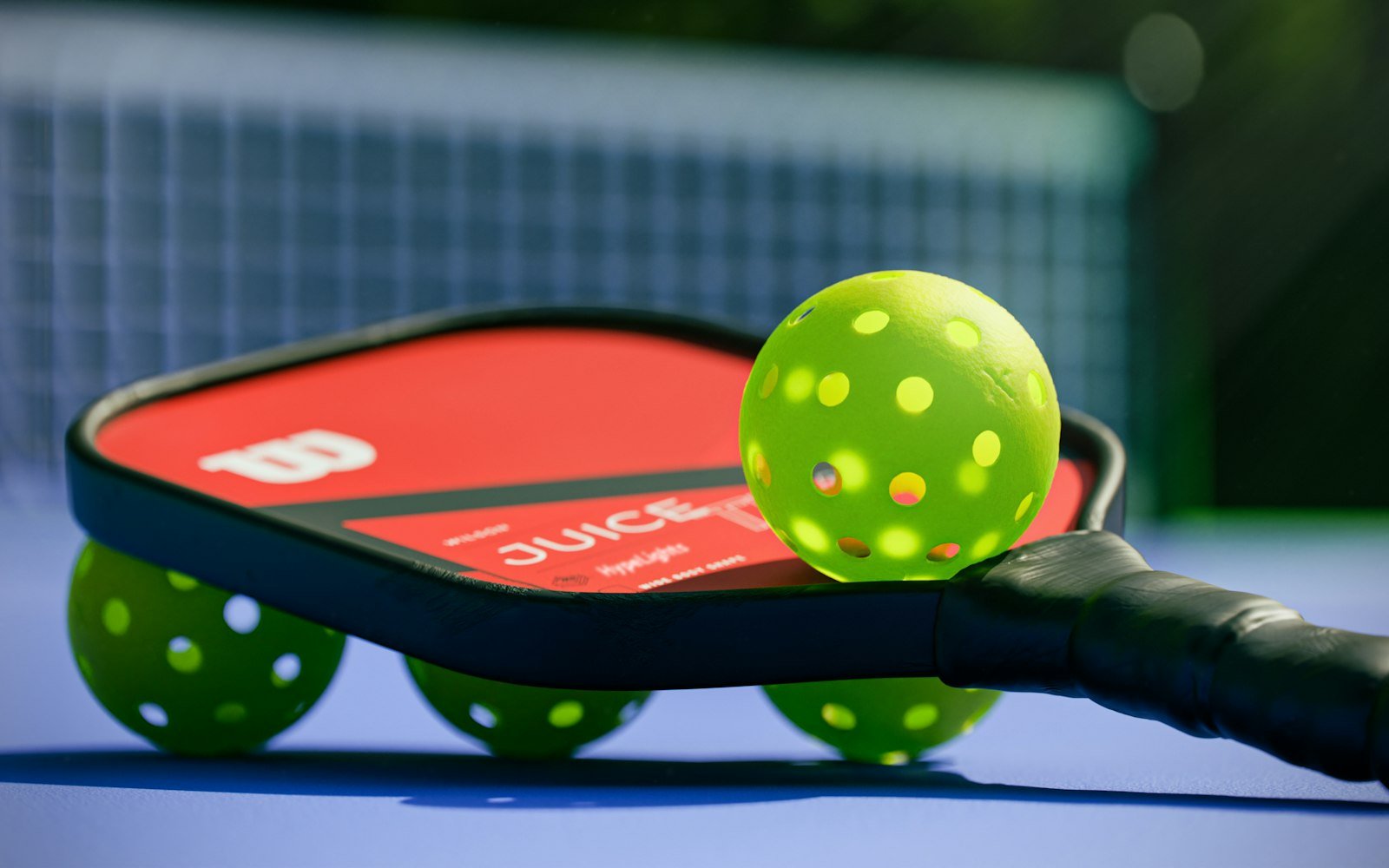
Pickleball is easy to learn, but walking into the paddle aisle can feel overwhelming. The good news: four simple factors explain most of the difference between paddles. Get these right and you will enjoy the game more and progress faster.
1. Weight
- Light (under 7.8 oz): quick hands at the kitchen line and less strain on the arm; slightly less power.
- Mid-weight (7.8–8.3 oz): the best starting point for most players — a balance of control and power.
- Heavy (over 8.3 oz): more drive and stability, but slower to react and harder on the elbow.
2. Grip size
Grip circumference usually ranges from 4 to 4.5 inches. If you are between sizes, choose the smaller one — you can always build it up with an overgrip. A grip that is too large makes wrist snaps and fast exchanges difficult.
3. Core thickness
Most paddles use a polymer honeycomb core. Thicker cores (around 16 mm) feel softer and give more control and a bigger sweet spot. Thinner cores (around 13 mm) feel crisper and add pop for players who like to drive the ball.
4. Face material
- Fiberglass: lively and powerful, often at friendly prices.
- Carbon fiber: excellent feel and consistency; textured raw-carbon faces help generate spin.
Do not forget the ball
Outdoor balls have smaller holes (typically 40) and a harder shell to handle wind and rough courts, while indoor balls are softer with larger holes. If you plan to play in sanctioned events, choose paddles and balls that are approved by USA Pickleball.
Shop paddles, balls and accessories in our Tennis & Pickleball category.
Leave a Reply